Electric Lawn Mower vs Gas: Which Should You Buy? (October 2026)
For electric lawn mower vs gas, choose battery power for quieter mowing and less engine upkeep, or gas for refueling during longer jobs. Match your choice to mowing time, grass growth, charging access and the maintenance you'll do.
On this page (10 sections)
- Electric lawn mower vs gas: which should you buy?
- Who should choose the Greenworks, and who should skip it?
- Who should choose the BILT HARD, and who should skip it?
- Which power source suits your yard size and grass?
- Which mower is easier to control and store?
- What should you do before the first mow?
- Should you mulch, bag or side discharge?
- How much care does each mower need?
- What buying mistakes should you avoid?
- Which should you buy: electric lawn mower vs gas?
For electric lawn mower vs gas, choose battery power for quieter routine mowing and fewer engine chores; choose gas when refueling makes long jobs easier to finish. Your mowing schedule and charging setup matter as much as yard size.
Here, electric means a cordless battery mower. A corded mower has a different set of limits, especially outlet access and cable routing; our corded vs cordless lawn mower guide covers that choice.
The Greenworks suits buyers who want adjustable walking pace and a shared battery system. The BILT HARD suits buyers who prefer fuel stops and accept engine care.
 Best for noise-sensitive neighborhoods
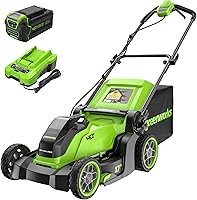
Greenworks 60V 21-Inch Self-Propelled Mower
 Best for extended mowing sessions
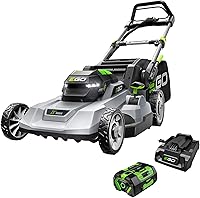
BILT HARD 21-Inch Self-Propelled Gas Mower
Electric lawn mower vs gas: which should you buy?
Choose battery power for regular, planned mowing and gas for long sessions where charging would interrupt the job. Neither choice removes the need to match the mower to your grass and terrain.
Battery power fits a weekly routine well: charge ahead, mow while growth is manageable, then clean and store the mower. It becomes less convenient if you regularly start with flat batteries or need several sessions' worth of cutting at once.
Gas fits buyers who keep suitable fuel available and stay on top of service. Refueling extends a session, though you must stop and let the engine cool before adding fuel.
Don't buy gas solely because your lawn is large, or battery solely because it's small. Obstacles, slopes and thick growth can make a compact yard take longer than a larger open lawn.
For more context, read whether battery lawn mowers are any good. Our guide to how to choose a lawn mower for your yard helps you weigh power source alongside handling and storage.
Who should choose the Greenworks, and who should skip it?
Choose the Greenworks for regular mowing near neighbors, adjustable drive control and a simpler engine-free routine. Skip it if you can't arrange suitable charging or need to keep cutting beyond the batteries' useful coverage.
Its 60V brushless system comes with two 4.0 Ah batteries and a dual-port charger. Greenworks claims coverage up to 3/4 acre per charge, with results varying by terrain and technique.
Treat that coverage as a planning ceiling. If your lawn approaches that area, allow extra capacity for dense patches, repeat passes and the way you use the drive.
The adjustable rear-wheel drive is useful when your preferred pace changes around beds or across open sections. It also lets you slow down for heavier growth instead of trying to maintain one walking speed everywhere.
Greenworks backs the tool and batteries with a 4-year limited warranty. Its batteries work with more than 75 tools in the Greenworks 60V range, which adds value if you plan to use that same system for other yard work.
Skip this mower if you expect battery power to eliminate all care. The cutting parts still need attention, and poor charging habits can leave you unable to finish when the weather window is short.
Who should choose the BILT HARD, and who should skip it?
Choose the BILT HARD for extended mowing with fuel stops, especially if engine care already fits your routine. Skip it if adjustable walking speed or easy manual handling is a priority.
It has a 201cc 4-cycle OHV engine and a steel cutting deck. Those features suit a buyer who wants a gas mower with powered forward movement and familiar clipping options.
The drive moves at a fixed walking speed. That works best when the pace suits you and your routes are fairly open; frequent tight turns and awkward corners make control feel more important than engine size.
At 89.2 lb, moving it without drive assistance deserves thought. Consider shed thresholds, transport and any place where you'll need to pull it backward or reposition it by hand.
Don't choose it just to avoid battery replacement concerns. A gas mower brings its own ongoing supplies and service needs, so compare the work you'll actually do over several seasons.
Which power source suits your yard size and grass?
Choose by mowing time and workload, with extra room for difficult conditions. Lawn area alone doesn't show how long either mower will need to run.
Count only the grass you mow, rather than the whole property. Then consider time spent turning around trees, emptying the bag and overlapping narrow sections.
A flat, open lawn encourages steady passes. A yard with many beds, gates and slopes demands more stopping and maneuvering, even when the grass area is smaller.
Dense or overgrown grass increases cutting load. Battery coverage can fall, and a gas mower can still struggle if you feed too much grass into the deck at once.
Mow often enough to avoid removing more than about one-third of the grass blade in a pass. If growth gets ahead of you, raise the deck and reduce walking speed rather than forcing the mower through.
Let wet grass dry when possible. Damp clippings clump more readily, collect under the deck and make footing less secure.
Our guide to whether electric lawn mowers are powerful enough explains the cutting side of the choice. For planning a full session, read how long cordless mower batteries last.
Which mower is easier to control and store?
The Greenworks offers adjustable pace and lower weight, while the BILT HARD's fixed-speed drive needs to match your walking comfort. Both still require you to steer, turn and manage obstacles.
The Greenworks weighs 65 lb, which matters when repositioning it with the drive disengaged. Powered forward movement doesn't solve every handling task, particularly backing out of corners.
Its cutting width is 20.28 inches, compared with 21 inches for the BILT HARD. That small difference is unlikely to matter as much as a comfortable grip, turning room and access through gates.
Measure the narrowest access point and storage space using the mower's full dimensions. Cutting width describes the blade's path, not the widest part of the machine.
The Greenworks has folding handles for compact storage. Follow its storage instructions, and don't assume a gas mower can stand upright or lie on its side without leaking fluids.
For slopes, use each manual's limits and recommended mowing direction. Rear-wheel traction can help movement, but it doesn't make every incline suitable for a walk-behind mower.
Read self-propelled vs push mowers if you're unsure whether powered drive is worth having. A small, flat lawn may be easy enough to mow without it.
What should you do before the first mow?
Set up the power source, cutting height and clipping mode before starting. A few minutes of preparation prevents avoidable stops and helps you spot an unsuitable setup early.
Electric lawn mower setup vs gas setup
For the Greenworks, assemble and secure the handles, then charge the batteries with the approved charger as instructed. Learn the blade and drive controls before entering a tight part of the yard.
Choose a dry charging location within the battery manual's temperature limits. Avoid building a routine around batteries left in a hot vehicle or an exposed, damp shed.
For the BILT HARD, check the manual's fuel and oil requirements before starting. Confirm the oil level rather than assuming the engine arrives ready to run, and don't mix oil into fuel for its 4-cycle engine.
Start and operate a gas mower outdoors, away from enclosed spaces. Store fuel in an approved container and keep it away from ignition sources.
Prepare the lawn and cutting setup
Walk the area first and remove stones, toys, wire and other loose objects. Check for hidden sprinkler heads or raised edging that could meet the blade.
Set the deck on level ground with the mower off. Start conservatively high if you don't know the lawn's usual cutting height, then adjust to suit the grass.
Fit the correct bag, plug or discharge accessory for your chosen mode. Read the starting sequence and learn how to stop both the blade and forward drive before you begin.
Should you mulch, bag or side discharge?
Use mulching for manageable routine growth, bagging when you want to collect clippings, and side discharge when you can spread them safely. The best mode depends on grass conditions and what you'll do with the cut material.
Both models support those three choices. The Greenworks also offers turbo leaf pickup, which is useful if seasonal leaf collection is part of your yard work.
Mulching works best with small amounts of dry grass. Trying to mulch a heavy cut in one pass often leaves clumps, so shorten the amount removed or make another pass after conditions improve.
Bagging keeps cut material together, but emptying the bag adds stops and disposal work. Plan a convenient collection point rather than carrying every load across the yard.
Side discharge reduces collection work, though you must direct clippings away from people, paths and property. Avoid leaving thick piles that cover the grass beneath them.
For help choosing a regular setup, see what mulching means on a lawn mower. Change accessories only after the mower is off and the blade has stopped.
How much care does each mower need?
Battery mowers need less engine-related service, but both types need blade and deck care. Choose gas only if you're willing to follow its engine schedule as well.
After mowing, disconnect the power source as directed before removing stuck clippings. Use the cleaning method in the manual rather than spraying water into openings or reaching beneath an energized deck.
Keep the blade sharp and inspect it for damage. A dull blade tears grass and increases the work required from either power source.
Follow instructions for blade removal, balancing and fastening, or have a mower service shop handle that work. Wear alone isn't a reason to replace the entire mower.
For battery care, follow the specified charging and storage guidance, especially during long periods without mowing. Keep battery contacts clean and dry, and let a hot pack cool as directed before charging.
For gas care, follow the oil, air-filter, spark-plug and fuel-storage schedule. The correct procedure and service intervals come from the engine manual, not a generic seasonal checklist.
Before storing either mower for an extended period, clean it and inspect worn parts. Preparing it at the end of the season is easier than discovering a problem when the grass needs cutting again.
What buying mistakes should you avoid?
Avoid planning around maximum coverage or engine size alone. The wrong routine can make a suitable mower frustrating to use.
- Leaving no battery margin: A mower that barely covers your lawn in light growth may need a break when grass is heavier.
- Ignoring drive speed: Self-propelled doesn't always mean adjustable, and an uncomfortable pace affects every pass.
- Choosing by voltage or engine displacement alone: Neither number tells you how easily the mower turns, stores or fits your routes.
- Forgetting shared battery demand: A compatible trimmer or blower may need the same charged packs after mowing.
- Expecting gas to be interruption-free: Refueling, cooling and bag emptying still create pauses.
- Buying for rare overgrowth: Match the mower to your normal schedule, then manage occasional heavy grass with a higher cut and slower passes.
Also compare ongoing supplies before deciding. Battery replacements, fuel, engine service and blade care belong in the ownership plan, even though they arise at different times.
Which should you buy: electric lawn mower vs gas?
For the electric lawn mower vs gas decision, choose the Greenworks if charging ahead is easy and you value quiet operation and pace control. Choose the BILT HARD if long-session refueling matters more and its fixed walking speed suits you.
If you're close to a battery mower's coverage limit, resolve that before ordering: plan for additional compatible capacity, a charging break or smaller mowing sessions. If none fits your schedule, gas is the more practical choice.
If your lawn is straightforward and regularly cut, don't take on engine care just out of habit. Compare our best electric lawn mowers to find the battery model that best fits your space and routine.
Frequently asked questions
Is an electric lawn mower better than a gas mower?
An electric mower is better for buyers who want quieter mowing, easy starts and fewer engine chores; gas suits longer jobs when refueling is more practical than charging. Compare drive controls, handling and your usual mowing time before choosing, since those details affect every session.
Can a battery mower handle a large yard?
Yes, if its usable battery capacity covers your lawn under normal mowing conditions; Greenworks claims up to 3/4 acre per charge for this mower, with results varying by terrain and technique. Leave a margin for heavy growth, slopes and extra passes rather than planning around the maximum.
Do electric lawn mowers need less maintenance?
Yes, battery mowers avoid fuel handling, oil changes and other gas engine service; they still need a sharp blade, a clean deck and careful battery storage. Follow the mower and battery manuals, and disconnect the power source before clearing clippings or working near the blade.
Which mower is quieter, electric or gas?
Electric mowers are generally quieter, and Greenworks describes this model as quieter than gas mowers; blade noise and debris still make sound, so follow hearing-protection guidance and local mowing hours. Lower noise is useful near neighbors, but it doesn't make early mowing suitable in every neighborhood.
Which is better for thick grass, electric or gas?
Either type can suit thick grass when the mower has enough cutting ability and you manage the growth; gas refueling helps with long jobs, while battery coverage needs more margin in heavy grass. Keep the blade sharp, raise the deck when needed and slow your walking pace.