Corded vs Cordless Lawn Mowers: Which Is Better? (October 2026)
For a corded vs cordless lawn mower, choose corded for an open lawn within safe cord reach and cordless for obstacles or separate lawn sections. Check the required cord length or battery capacity against your whole mowing route before buying.
On this page (11 sections)
- Corded vs cordless lawn mower: what changes in daily use?
- Which power source suits your lawn layout?
- Which of these three mowers fits your routine?
- Does a corded mower have unlimited runtime?
- How much cordless runtime should you allow?
- Will either power source handle thick grass?
- What should you compare beyond the power source?
- How should you set up each mower before the first cut?
- Are corded or cordless mowers easier to maintain?
- Which common buying mistakes should you avoid?
- Which should you buy: corded or cordless?
For a corded vs cordless lawn mower, choose corded when your lawn has a clear route from an outdoor outlet, and cordless when trees, gates or separate sections make a cable awkward. Then check whether the permitted cord reaches every corner or the battery can cover your normal mowing session.
A small lawn can still be a poor match for a cord if planting beds interrupt every pass. An open rectangle beside an outlet can be a good corded choice even when mowing takes longer.
 Best for compact divided lawns
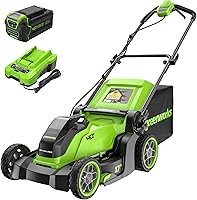
Greenworks 40V 16-Inch Push Mower (25322)
 Best for lawns near outlets
Craftsman CMEMW213 20-Inch Corded Push Mower
Corded vs cordless lawn mower: what changes in daily use?
The main difference is where you manage the power supply: a cord needs attention during mowing, while a battery needs charging beforehand. Both suit regular lawn care when their reach or charge capacity matches the job.
Corded power removes the need to stop for a depleted battery. Cordless power lets you cross paths and move between lawn sections without pulling a cable behind you.
Neither power source tells you how hard the mower is to push. All three models here are push mowers, so you provide the forward movement.
Our cordless lawn mower guide explains battery-system choices in more detail. Read whether battery lawn mowers are any good if you're weighing their everyday strengths and limits.
Which power source suits your lawn layout?
Choose corded for a simple route and cordless for a broken-up lawn. Measure the grass you mow and the route to it, rather than using your whole property size as the deciding figure.
A house, driveway and patio don't count toward mowing area. Beds and trees reduce grass area but can add turns, so a smaller lawn may take more effort than its size suggests.
How do you check corded vs cordless mower reach?
Walk from the outlet to the farthest lawn corner along the route a cord could safely follow. Allow for turns around fixed obstacles, then compare that distance with the mower manual's permitted extension-cord length.
Don't buy a corded mower on the assumption that you can keep adding cable. Cord gauge and maximum length must suit the mower's electrical requirements.
For cordless, consider how you move between sections and where you'll charge. A detached patch across a path is easy to reach without a cable, but it still adds mowing time.
Measure narrow gates and storage access using the mower's overall width, not its cutting width. Our guide to lawn mowers for small yards helps if access and tight turns matter more than covering broad strips.
Which of these three mowers fits your routine?
The Greenworks 25322 suits compact divided lawns, the Craftsman suits open lawns near outlets, and the Greenworks 17-inch suits short, regular sessions. Choose the job fit before comparing extra features.
Greenworks 25322: for compact lawns with awkward cord routes
The Greenworks 40V 16-Inch Push Mower includes a battery and charger, so it suits someone starting with cordless equipment. Greenworks claims coverage of up to one-third acre with the included battery, depending on grass conditions and operator technique.
Its single-lever height adjustment has five positions from 1.25 to 3.75 inches. That lets you change mowing height without adjusting each wheel separately.
Choose it for beds, lawn sections and shorter passes where a narrow cut is a reasonable trade for cord-free movement. Skip it for a broad, open lawn if reducing the number of passes is your main goal.
Craftsman CMEMW213: for open lawns and flexible clipping choices
The Craftsman combines a 13-amp motor with mulching, bagging and side discharge. That third option suits someone who wants to spread clippings onto the lawn without using the mulch setup.
Its single-lever cutting-height range is 1.5 to 4 inches, and folding handles help with storage. Check the available storage space rather than assuming folded handles make the entire mower compact.
Choose it when the lawn gives you room for long passes and the cord can stay clear. Skip it if the route wraps around several trees, crosses busy paths or exceeds the manual's allowed cord reach.
Greenworks 17-inch: for a regular, shorter mowing job
The Greenworks 40V 17-Inch Push Mower has a brushless motor and six height positions controlled by one lever. Greenworks claims up to 35 minutes of runtime with the included battery and describes it as suitable for lawns up to one-quarter acre.
Choose it if you mow before the lawn becomes heavily overgrown and your normal session leaves room within that runtime estimate. Its mulch-or-bag setup fits routine clipping management.
Skip it if you need side discharge or expect to mow a long session without charging or a compatible spare. The small width difference between the two Greenworks models shouldn't decide the purchase by itself.
Does a corded mower have unlimited runtime?
A corded mower has no battery charge limit, but it still needs safe electrical connections and use within its operating instructions. You can keep mowing without scheduling a recharge, provided conditions and the equipment allow it.
That suits someone whose mowing time varies from week to week. However, cord repositioning and bag emptying still interrupt the job.
Use the required outlet protection and an outdoor-rated extension cord with the gauge and length specified in the manual. An undersized or overly long cord can cause voltage drop and overheating.
Keep connections away from water, inspect the cable before use and stop if you find damage. Never handle a damaged cord while it's energized.
How much cordless runtime should you allow?
Choose a cordless mower with capacity to spare, rather than planning to use every minute of an advertised maximum. Dense grass, extra overlap and repeated turns can all increase the work needed to finish.
Time a normal mowing session with your current mower if possible. Separate actual cutting time from breaks, then allow for any narrower cutting path on the replacement.
A battery claim in minutes and a coverage claim in acres measure different things. Don't use them to declare one mower longer-running unless the conditions are comparable.
A compatible spare can help with a longer job, but confirm both compatibility and how you'll recharge it. Sharing a battery with a trimmer also means reserving enough charge for the edging afterward.
Our guide to cordless mower battery life explains the main demands on a charge. Don't assume a battery that finishes an easy summer cut will cover the same area through thick spring growth.
Will either power source handle thick grass?
Both can suit routine grass cutting, but grass height and mowing habits matter more than choosing by cord or battery alone. Don't compare the Craftsman's motor amps directly with the Greenworks battery voltage as a measure of cutting strength.
Amps describe electrical current, while volts describe voltage. Those numbers don't give a direct comparison of blade performance across these mowers.
Mow dry grass and avoid removing more than about one-third of the blade's height in one cut. If growth has become tall, raise the deck and make another pass later rather than forcing the mower through at a low setting.
Slow your walking pace when growth gets dense. If the motor labors or clippings build up, stop and address the cause instead of repeatedly pushing into the same blockage.
Read our guide to electric mower power if thick grass is your main concern. A battery upgrade alone won't correct a dull blade or an overly low cutting height.
What should you compare beyond the power source?
Compare cutting width, clipping choices and pushing effort before making the final choice. A mower that reaches the lawn still needs to fit its paths and your mowing routine.
Cutting width and grass handling
The Craftsman's wider cut reduces the number of passes across open ground compared with either Greenworks. A smaller mower can be easier to position in tight spaces, but tight turns still depend on the full machine's shape.
Mulching returns finely cut clippings to the lawn and works best when you're removing modest growth. Bagging collects clippings but adds stops to empty the bag.
Side discharge spreads clippings without collecting them, so direct discharge away from people, paths and property. Of these three choices, only the Craftsman offers that option.
Push effort and slopes
All three require you to push, so think about slopes and how you feel near the end of a mowing session. Cordless movement doesn't provide help driving the wheels.
If pushing is the hard part of your current routine, our self-propelled vs push mower comparison addresses that choice. Follow each mower's slope limits and mowing-direction instructions rather than judging a slope by appearance alone.
How should you set up each mower before the first cut?
Set up the route for corded mowing and the charging routine for cordless mowing, then check the lawn and mower before starting. Read the manual before assembly, battery installation or connecting power.
For a corded model, lay out the cable clear of the intended cutting path and use the cord-retention feature as instructed. Follow the recommended mowing pattern, keeping track of where the cable moves at each turn.
For cordless, fully charge the battery as directed and confirm it locks into place correctly. Plan a dry charging location within the battery and charger's permitted temperature range.
For either type, remove stones, sticks, toys and other loose objects from the lawn. Set the cutting height with power disconnected, then attach the bag or install the required mulch or discharge parts correctly.
Start with a higher setting if you're unsure how much growth you're removing. You can lower it on a later cut without scalping the lawn on the first pass.
Are corded or cordless mowers easier to maintain?
Both avoid gas-engine oil and fuel care, but both still need cleaning, blade care and safe storage. Corded models add cable inspection, while cordless models add battery care.
After mowing, stop the mower, wait for the blade to stop and disconnect power as the manual directs. Unplug a corded mower or remove the battery and any required safety key before clearing or servicing it.
Remove grass buildup using the approved method. Don't hose down electrical parts unless the manual specifically permits that cleaning method.
Keep the blade sharp and balanced according to the service instructions. A dull blade can leave ragged grass tips and make cutting harder regardless of the power source.
Store batteries away from excess heat and follow Greenworks' charging and long-term storage directions. Coil an unplugged extension cord without tight kinks, and replace damaged electrical equipment.
For a broader ownership comparison, see whether electric lawn mowers are worth it. Include replacement batteries, a suitable cord and blade care when comparing long-term needs.
Which common buying mistakes should you avoid?
Avoid choosing by lawn size alone or buying right at the limit of reach or runtime. Leave room for the real route, grass growth and your mowing habits.
- Buying extra cord to fix poor reach: the manual's length and gauge limits still apply.
- Treating maximum battery coverage as a promise: lawn conditions and technique change how far a charge goes.
- Assuming all batteries from one brand fit: confirm the exact battery platform and approved charger.
- Buying a push mower to solve pushing fatigue: changing the power source doesn't add wheel drive.
- Choosing a low setting to mow less often: removing too much growth at once stresses the lawn and increases cutting load.
Also check the clipped-grass routine before buying. A bagging habit means regular emptying, while successful mulching depends on keeping up with growth.
Which should you buy: corded or cordless?
Settle the corded vs cordless lawn mower decision with the restriction you can manage: cord routing during the job or battery charging around it. Choose only after checking every lawn section and your normal mowing time.
Pick the Craftsman if the entire lawn sits within safe cord reach, the route is open and you want side discharge. Its broader cutting path makes the most sense where you can use long, clear passes.
Pick the Greenworks 25322 for a compact, divided lawn where freedom from a cable matters more than cutting a wide strip. Consider the Greenworks 17-inch for shorter regular sessions where its brushless motor and height adjustment fit your needs.
If neither safe cord reach nor a workable battery plan covers the job, widen the search before buying. Our electric vs gas mower guide explains the next set of tradeoffs.
Frequently asked questions
Is a corded or cordless lawn mower better?
Corded is better for an open lawn within safe reach of an outlet; cordless is better for divided lawns and routes around obstacles. Choose the restriction you can manage most easily: moving a cord during mowing or charging a battery before mowing and allowing enough capacity to finish.
Can a corded mower handle a large yard?
A corded mower can suit a larger lawn only when every section is within the extension-cord length allowed by its manual. Measure the route around obstacles, not just the straight-line distance from the outlet, and choose another power source if safe cord reach falls short.
How long does a cordless mower battery last?
Greenworks claims up to 35 minutes per charge for its 40V 17-Inch Push Mower with the included battery. Tall or dense grass can reduce runtime, so leave spare capacity when planning a session and use our cordless mower battery life guide to understand what changes charge life.
Do corded and cordless mowers cut grass differently?
Both use a powered blade, and either can leave an even lawn when matched to the grass and used correctly. Blade condition, cutting height, mowing pace and clipping buildup affect the result, so don't choose by power source alone or compare motor amps directly with battery voltage.
Which electric mower should I choose for my yard?
Choose an electric mower that fits your route, mowing time and ability to push it. Check gates, slopes, outlet reach and charging space before comparing extra features, then use our cordless mower buying guide and electric mower value guide to narrow your options.