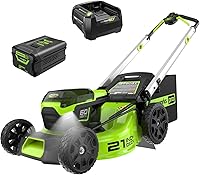
Greenworks 40V, 60V and 80V Mowers: Which Voltage?
Choose the Greenworks 60V lawn mower for a wider cut, adjustable self-propelled drive and a kit with two batteries. Pick the smaller 24V or 40V push mower for compact lawns, or the 80V model if its battery system fits your other tools.
On this page (14 sections)
- Which Greenworks 60V lawn mower fits your yard?
- How do Greenworks 40V, 60V and 80V mowers compare?
- Is a Greenworks 40V mower enough for your lawn?
- When does a 24V mower make sense?
- Is an 80V Greenworks mower worth choosing?
- Can you use the same batteries across Greenworks voltages?
- How should you measure your lawn and plan battery capacity?
- Should you choose push or self-propelled drive?
- What should you set up before the first mow?
- How can you get a cleaner cut without wasting battery?
- What care does a cordless mower still need?
- Which mistakes most often lead to the wrong mower?
- Which Greenworks mower voltage should you choose?
- Sources
Choose the Greenworks 60V lawn mower if you want a wider cut, adjustable self-propelled drive and two batteries in the kit. The smaller push models suit compact lawns, while the 80V mower makes sense for buyers building around that battery system.
Start with the lawn you actually mow: its open areas, narrow passages, slopes and storage route. A mower that fits those spaces is more useful than a higher voltage label alone.
If you're deciding whether cordless mowing suits your routine, start with our cordless lawn mower buying guide. This comparison focuses on which of these four Greenworks kits fits your work.
Which Greenworks 60V lawn mower fits your yard?
The 60V 21-inch self-propelled model is the strongest fit here for a broad lawn where pushing adds effort. Its adjustable rear-wheel drive helps move the mower forward while you guide it.
Choose it when you have long mowing runs, want to set a comfortable walking pace or regularly switch between collecting and returning clippings. It offers mulching, bagging, side discharge and turbo leaf pickup.
The main reason to skip it is handling space. At 65 pounds, it needs more thought than a compact push mower if your route includes steps, a raised shed entrance or frequent lifting.
Self-propelled drive helps while mowing, but it doesn't remove the work of turning, parking or moving the mower with the power off. Check the full route from storage to lawn before buying.
What does this Greenworks 60V lawn mower kit include?
The kit includes two 4.0Ah batteries and a dual-port turbo charger. Its automatic battery switchover supports longer mowing sessions without stopping to exchange packs manually.
Greenworks claims up to 3/4 acre per charge for this setup, depending on terrain and technique. Use that as a planning ceiling and leave room for dense grass, frequent turns and slower progress.
For a closer look at its controls and features, read our Greenworks 60V mower review. For a wider view of the range, see are Greenworks lawn mowers good?.
How do Greenworks 40V, 60V and 80V mowers compare?
Drive type, mower size and the complete battery kit separate these choices more usefully than voltage alone. The two smaller models need manual pushing, while the larger pair have adjustable rear-wheel drive.
| Greenworks system | Example mower | Drive | Battery setup | Greenworks coverage or runtime claim |
|---|---|---|---|---|
| 24V | 13-inch push mower | Push | 4.0Ah battery and charger | Up to 30 minutes per charge |
| 40V | 16-inch push mower | Push | 4.0Ah battery and charger | Up to 1/3 acre |
| 60V | 21-inch self-propelled mower | Rear-wheel drive | Two 4.0Ah batteries and dual-port turbo charger | Up to 3/4 acre per charge |
| 80V | 21-inch self-propelled mower | Rear-wheel drive | 4.0Ah battery and charger | Up to 1/2 acre |
The model names use nominal sizes. The actual cutting widths are 15.67 inches for the 40V model and 20.28 inches for both larger mowers.
A wider cut reduces the number of passes across open grass. In a lawn broken into small patches by beds, paths and trees, room to turn may matter more than width.
Runtime and coverage also answer different questions. Minutes describe time under certain conditions; acreage describes area, which depends on walking pace, overlap and how much of the session involves turning.
Is a Greenworks 40V mower enough for your lawn?
The 40V push mower suits a smaller, mostly level lawn where you can push comfortably and want more width than the compact 24V model. It's a sensible middle choice for lawns with both open patches and tight corners.
At 37.5 pounds, it is lighter than either self-propelled option here. That matters if you regularly wheel the mower through a narrow side passage or reposition it around separate grass patches.
Its single-lever, 5-position height adjustment makes seasonal changes straightforward, and you can mulch or rear-bag clippings. Choose the cutting height for your grass type rather than starting at the lowest setting.
Skip this mower if manual pushing is the part of mowing you most want to avoid. A smaller mower can still demand effort on soft ground or an incline.
Our Greenworks 40V mower review covers this model in more detail. Read how long a cordless mower battery lasts if your main concern is finishing without a charging break.
When does a 24V mower make sense?
The 24V push mower fits a tiny lawn where compact size matters more than clearing a wide strip. Its narrow deck is useful around closely spaced beds and awkward corners.
At 18 pounds, it is the lightest mower in this comparison. That makes it the first model to consider if moving the mower into storage is a bigger concern than mowing speed.
It has a brushless motor, a rust-resistant poly deck and a choice of mulching or rear bagging. The folding handle also helps when arranging storage around other tools.
Skip it for a broad, open lawn that would require many extra passes. A mower can be easy to move yet still make the job longer because each pass covers less ground.
For a small front patch and a separate back patch, think about both mowing time and the route between them. Compact size is most valuable when the whole job involves short runs and frequent turns.
Is an 80V Greenworks mower worth choosing?
The 80V self-propelled model is worth choosing when you want a wide mower with a steel deck and intend to use compatible 80V tools. Existing compatible batteries can make that system a practical choice.
It combines a brushless motor, variable-speed rear-wheel drive and LED headlights. Those features suit longer mowing runs where you want help moving forward and control over walking pace.
Its 75-pound weight is the main handling trade-off. Skip it if getting the mower out requires lifting, or if your lawn is mostly small sections that call for frequent repositioning.
Don't choose it solely because 80 is a larger number than 60. The two kits have the same cutting width, and their battery packages differ.
Headlights can improve visibility, but they don't make wet grass, hidden obstacles or poor footing suitable mowing conditions. Pick a time when you can clearly see the lawn and work safely.
Can you use the same batteries across Greenworks voltages?
Match the exact battery and mower models before buying for battery sharing. Greenworks describes compatibility within each voltage system; the shared brand name does not establish compatibility across systems.
Read the voltage and model number on your current packs, then check the mower manual's compatibility guidance. Include your charger in that check rather than assuming it supports a different battery family.
Think about the order of your yard work too. If mowing uses the same pack you need for trimming, sharing may mean a recharge break before you finish the edges.
A second compatible battery can help with that workflow, but only if it fits the mower and your charging routine. Don't count an old spare as usable capacity until you've confirmed compatibility and condition.
If you're starting from scratch, choose the mower that fits your lawn first. Then consider which matching trimmer, blower or other tools you actually expect to need.
How should you measure your lawn and plan battery capacity?
Measure the grass area you cut, then leave room below the mower's coverage claim. Your property size includes the house, driveway, patios and beds, none of which need mowing.
Break an irregular lawn into rough rectangles and add their areas. Include separate side strips and front patches so a small area doesn't get overlooked.
Next, consider how quickly the grass grows between cuts. Regular mowing places a different load on a battery mower than cutting a dense lawn after a long gap.
Tight turns, repeated overlap and bag-emptying stops also stretch the session. A clear rectangular lawn is easier to plan around than the same area split among trees and beds.
For a lawn near a kit's claimed limit, decide in advance whether a break is acceptable. If you need to finish in one session, favor a setup with room to spare rather than planning around ideal coverage.
Should you choose push or self-propelled drive?
Choose self-propelled drive when moving the mower forward is the main burden; choose push when light handling and short mowing runs matter more. Lawn shape is as important as lawn size.
A push mower can suit a level patch with many turns because you spend little time on long forward runs. On a larger lawn, powered drive can reduce the effort of covering distance.
Start an adjustable drive at a slow pace and increase it until you can steer comfortably. Walking faster than you can guide the deck leads to missed strips and awkward turns.
Self-propelled drive does not make a slope safe by itself. Follow the mower manual's slope limits and operating direction, and avoid mowing where footing is uncertain.
Our guide to self-propelled vs. push mowers explains the trade-offs. For concerns about thick grass, read are electric lawn mowers powerful enough?.
What should you set up before the first mow?
Read the manual, secure the handle and choose the clipping mode before installing the battery. A few checks at the start prevent interruptions once you're on the lawn.
- Check assembly. Make sure handle locks and fasteners are secure, with cables routed as the manual directs.
- Prepare the batteries. Charge them with the correct charger in a dry location that meets its temperature and ventilation instructions.
- Set the deck height. Start high enough to avoid removing too much grass, especially if the lawn is longer than usual.
- Fit the correct attachments. Use the bag, mulch parts or discharge parts required for your chosen mode.
- Clear the lawn. Remove sticks, stones, toys and other objects before starting.
- Learn the controls. Know how to stop the blade and drive before beginning your first pass.
On the self-propelled models, practice the drive control on a clear, level area. Release the drive as needed for tight turns, following the manual's instructions.
Check gate openings and storage clearances before the first outing too. Cutting width is narrower than the mower's full body, so it isn't a reliable measure of passage clearance.
How can you get a cleaner cut without wasting battery?
Mow dry grass regularly and avoid taking off too much at once. These habits reduce the amount of material the blade must cut and move through the deck.
Use the one-third rule as a general starting point: remove no more than about a third of the grass height in one cut. Choose the final height for your grass species and season.
If the lawn is overgrown, raise the deck and work more slowly. A later cut at a lower setting is better than forcing the mower through a heavy load in one pass.
Overlap enough to avoid narrow missed strips, but don't cover half the previous pass. Plan long runs where the lawn allows them and handle the small corners afterward.
Mulch when clippings are short enough to spread evenly. If they form clumps, reduce the load by slowing down, raising the deck or collecting clippings.
Empty the bag before packed grass restricts collection. For more detail on returning clippings to the lawn, read what mulching does on a lawn mower.
What care does a cordless mower still need?
Keep the blade, deck and batteries in good condition even though there's no gas engine to service. Battery power removes fuel handling and engine oil changes, but grass buildup and blade wear still need attention.
Before clearing a blockage or working near the blade, stop the mower, remove the battery and follow the manual's disabling procedure. Never reach under the deck while the mower can start.
Remove packed clippings with a suitable brush or scraper after use. Follow the cleaning instructions rather than assuming the battery compartment, motor housing or charger can be rinsed.
Inspect the blade for damage and arrange sharpening or replacement as directed. A dull blade can leave ragged grass tips and make the mower work harder.
Store batteries and chargers in a dry place within their stated temperature limits. For long storage periods, follow the battery manual's charge guidance rather than leaving packs somewhere hot or freezing.
Which mistakes most often lead to the wrong mower?
The biggest buying mistake is choosing voltage before checking fit, effort and battery needs. Use these checks to avoid a mower that looks suitable on paper but complicates your routine.
- Buying to the coverage limit: Allow for thick grass, turns and less frequent mowing.
- Ignoring the storage route: Steps, tight gates and raised thresholds can matter more than deck width.
- Confusing drive with cutting performance: Self-propelled wheels move the mower; grass conditions still affect the blade's workload.
- Assuming all packs fit: Confirm the exact battery family before counting existing packs as spares.
- Choosing a tiny deck for open ground: Easier handling can come with many more passes.
- Cutting too low to mow less often: Removing too much grass can stress the lawn and increase the load during that cut.
If several choices still seem suitable, use our guide to choosing a lawn mower for your yard to rank the needs that matter most.
Which Greenworks mower voltage should you choose?
Choose the Greenworks 60V lawn mower for open mowing areas where powered drive and the two-battery kit solve a real need. Before ordering, confirm that you can move and store it comfortably.
Choose 40V for a smaller lawn where manual pushing is manageable, or 24V when compact handling matters most. Pick 80V when its steel deck and compatible tool system fit your plans and you can manage its weight.
Use your hardest routine task as the tie-breaker: covering distance, pushing, making tight turns or moving the mower into storage. That task will affect every mow.
For alternatives with different sizes and battery setups, browse our cordless lawn mower guide.
Sources
The links below identify the four mower kits compared in this guide.
- Greenworks 24V 13-Inch Push Mower
- Greenworks 40V 16-Inch Push Mower (25322)
- Greenworks 60V 21-Inch Self-Propelled Mower
- Greenworks 80V 21-Inch Self-Propelled Mower
Frequently asked questions
Is a Greenworks 60V lawn mower enough for a large yard?
This Greenworks 60V lawn mower suits larger lawns where a wide cut and self-propelled drive help; Greenworks claims up to 3/4 acre with the two included batteries. Leave room below that claim if your grass grows thick, your route has many turns or you often mow after long gaps.
Should I choose a Greenworks 40V or 60V mower?
Choose the 40V push mower for a smaller, mostly level lawn where you can comfortably supply the pushing effort; choose the 60V model for broader mowing areas or help moving forward. Measure gates and storage access too, since the wider mower takes more room to move and park.
Can Greenworks 40V batteries work in a 60V mower?
Choose batteries confirmed for the mower's exact voltage system and model; Greenworks describes compatibility within each system, so owning a Greenworks 40V battery does not establish compatibility with a 60V mower. Check the battery model and mower manual before planning to share packs with your other tools.
Is an 80V mower always more powerful than a 60V mower?
No, voltage alone does not establish which mower cuts better or finishes more lawn; battery capacity, motor design, cutting load and drive use all matter. These kits also differ: the 60V model includes two batteries, while the 80V model includes one, so compare complete kits rather than voltage labels.