5 Best Lawn Mowers for Hills and Slopes (October 2026)
The best lawn mowers for hills and slopes include the Greenworks 60V 21-Inch Self-Propelled Mower for mixed sloped yards, the Greenworks 80V 21-Inch Self-Propelled Mower for existing 80V households, and the EGO LM2114SP 21-Inch Self-Propelled Mower for frequent tight turns.
On this page (12 sections)
- Which lawn mower is best for hills and slopes?
- How should you choose a mower for your particular hill?
- What features matter most on a sloped lawn?
- How do rear-wheel and front-wheel drive compare on slopes?
- Should you choose self-propelled or push for a hill?
- How much battery capacity should you plan for on hills?
- How should you set up a mower before the first cut?
- Which clipping method makes sense on a slope?
- What mistakes make mowing hills harder?
- What care keeps a mower ready for sloped ground?
- How we chose these lawn mowers for hills
- Which lawn mower for hills should you choose?
The best lawn mower for hills is the Greenworks 60V 21-Inch Self-Propelled Mower for a mixed yard where adjustable pace and a two-battery kit matter. Its rear-wheel drive makes it a useful starting point for this comparison.
Your route may favor a lighter mower, different handle controls or a wider cutting path. Start with the slope limits in each model's manual, then choose around the sections that demand the most control.
Our picks at a glance
-
1
 Best for mixed sloped yards
Greenworks 60V 21-Inch Self-Propelled Mower
8.2/10 our score
See it on Amazon -
2
 Best for existing 80V households
Greenworks 80V 21-Inch Self-Propelled Mower
8.1/10 our score
See it on Amazon -
3
 Best for frequent tight turns
EGO LM2114SP 21-Inch Self-Propelled Mower
8.1/10 our score
See it on Amazon
- 4
 Check it
EGO LM2135SP 21-Inch Touch Drive Mower
Best for varied clipping needs - 5
 Check it
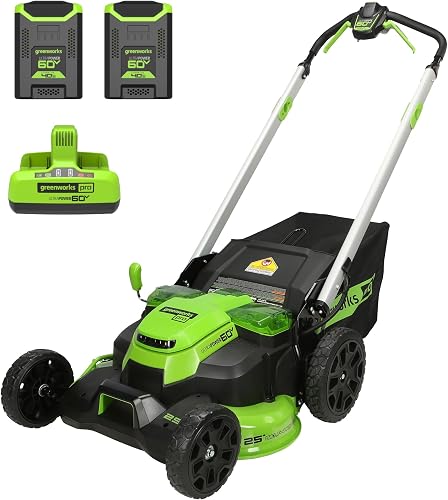
Greenworks 60V 25-Inch Self-Propelled Mower
Best for open rolling lawns
Which lawn mower is best for hills and slopes?
The Greenworks 60V 21-Inch offers the most balanced package here, while the EGO LM2114SP is the lighter alternative for frequent turns. The wider Greenworks suits open ground, and the other picks serve battery-platform or clipping needs.
A small score gap should not outweigh a poor fit for your route. Compare how you will turn, move between lawn sections and handle the mower when its drive is disengaged.
Greenworks 60V 21-Inch Self-Propelled Mower
- Rear-wheel drive
- On-the-go pace adjustment
- Two 4.0 Ah batteries
- 4-in-1 cutting system
A useful fit for lawns with open stretches, turns and changing grass conditions. Adjustable pace and a two-battery kit make it the most balanced choice here for mixed mowing routes.
Pros
- Adjust pace while mowing
- Two batteries and dual-port turbo charger included
- Mulch, bag, side discharge or collect leaves
Cons
- 65 lb requires thought around turns and storage
- Claimed acreage depends on terrain and technique
Choose the Greenworks 60V 21-Inch for a lawn that mixes open grass with beds, corners and changes in mowing pace. You can adjust its rear-wheel drive while moving, rather than choosing one pace for the whole route.
The kit includes two 4.0 Ah batteries and a dual-port turbo charger. Greenworks claims coverage of up to 3/4 acre per charge, with terrain and mowing technique affecting the result.
Its 4-in-1 system supports mulching, bagging, side discharge and turbo leaf pickup. That gives you options for routine cuts, collecting clippings and seasonal cleanup without choosing a mower solely around one task.
The 20.28-inch cutting width is a practical middle ground among these picks. It gives up some open-lawn coverage per pass compared with the wider Greenworks, but needs less clearance through a crowded route.
At 65 lb, it still needs careful handling during turns and movement without drive assistance. Skip it if getting the mower into storage involves lifting you cannot comfortably manage.
This is the default choice when you want flexible clipping options and a two-battery setup. Choose the lighter EGO instead if repeated direction changes are your main concern.
Greenworks 80V 21-Inch Self-Propelled Mower
- Rear-wheel drive
- Variable speed control
- 4.0 Ah battery and charger
- Steel deck
Choose this model if compatible Greenworks 80V tools already shape your yard-care setup. Its main tradeoff is weight, especially when moving without drive assistance.
Pros
- Variable speed with rear-wheel drive
- Steel deck and brushless motor
- Greenworks backs tool and battery with a 4-year limited warranty
Cons
- Heaviest mower in this comparison
- Single included battery needs careful runtime planning
Choose the Greenworks 80V 21-Inch if you already use compatible Greenworks 80V yard tools. Keeping tools on one battery platform can simplify charging and spare-battery planning, provided the packs are compatible with each tool.
It combines rear-wheel drive, variable speed and a steel deck. The included 4.0 Ah battery has Greenworks' claimed coverage of up to 1/2 acre, depending on grass condition and operator technique.
The key compromise is 75 lb, the highest weight in this group. Drive assistance helps move the mower forward, but you still handle its weight around corners, access paths and storage.
Its 20.28-inch cutting width matches the smaller Greenworks 60V model. Buy it for the battery platform and its controls, rather than expecting the higher voltage to prove better hill handling.
Skip this model if your route includes repeated awkward turns or frequent movement without the drive engaged. A lighter mower deserves priority when those tasks take up a large part of the job.
For a suitable lawn with straightforward access, it remains a sensible platform-based choice. Plan your battery needs around your actual mowing time rather than the acreage claim alone.
EGO LM2114SP 21-Inch Self-Propelled Mower
- Either-hand drive engagement
- Adjustable handle height
- Up to 50 minutes runtime
- Mulch, bag or side discharge
The lowest weight here makes this the first model to consider for routes with frequent changes of direction. Either-hand drive engagement and adjustable handle height help you match the controls to your grip.
Pros
- Lightest mower in this group
- Drive engages with either hand
- Folds flat for compact storage
Cons
- Less claimed runtime than the LM2135SP
- One included battery leaves no charged spare in the kit
Choose the EGO LM2114SP when lower weight and comfortable handle controls matter more than changing blade setups. At 50.9 lb, it is the lightest mower in this comparison, which matters whenever drive assistance is not doing the work.
Its dual toggles let you engage self-propel with either hand, while a fingertip dial adjusts pace. Adjustable handle height also gives you a way to improve your grip without bending over the mower.
EGO claims up to 50 minutes of runtime with the included 56V 6.0 Ah battery. Leave room below that figure when planning a route with thick grass, many turns or frequent stops.
The 21-inch deck offers seven cutting heights from 1.25 to 4 inches. Mulching, bagging and side discharge cover the main clipping choices, and a two-bushel collection bag is included.
This is a strong alternative for a lawn divided by beds or short sections where turning takes time. Lower weight does not expand the mower's allowed slope range, but it is useful when comparing handling demands.
Skip it if interchangeable blade options are central to your mowing plan. The LM2135SP adds those choices and a larger included battery, with more weight in return.
EGO LM2135SP 21-Inch Touch Drive Mower
- Palm-engaged Touch Drive
- Variable speed dial
- Interchangeable lower blades
- Rapid charger included
A good fit if you want to change blade setups for mulching, bagging or longer runtime. Palm engagement and a separate pace dial offer a different control feel from EGO's dual-toggle model.
Pros
- Three lower blades for different mowing priorities
- Adjustable drive speed
- Included battery works with all EGO power tools
Cons
- Blade changes add a maintenance step
- Heavier than the LM2114SP
Choose the EGO LM2135SP if you want to change the cutting setup for different clipping jobs. Its Select Cut system combines an upper blade with three interchangeable lower blades for mulching, high-lift bagging or extended runtime.
That flexibility suits someone who mulches routine growth but collects clippings for some cuts. Follow EGO's blade-selection and installation instructions rather than mixing parts or assuming every setup works the same way.
Touch Drive engages through palm pressure, and a separate dial sets speed from 0.9 to 3.1 mph. The useful question is whether that engagement method feels natural while you maintain a secure grip.
EGO claims up to 60 minutes of runtime with the included 56V 7.5 Ah battery. It also specifies a 60-minute charge for that battery with the included CH5500 Rapid Charger.
At 55.3 lb, this mower adds weight compared with the LM2114SP. Skip it if you want a simpler blade routine and the lightest option here.
If drive layout is part of your shortlist, read our guide to front-wheel versus rear-wheel drive mowers. Engagement style and driven-wheel layout are separate things to compare.
Greenworks 60V 25-Inch Self-Propelled Mower
- Widest cutting path here
- Rear-wheel drive
- Two 4.0 Ah batteries
- Dual-blade cutting system
Use the wider cutting path to reduce passes on open lawn with generous turning space. Skip it when narrow access, closely spaced obstacles or awkward corners shape most of your route.
Pros
- Wider cut reduces passes on open ground
- Two batteries and dual-port rapid charger included
- Greenworks backs tool and batteries with a 4-year limited warranty
Cons
- Overall width needs more gate and storage clearance
- Less suited to cramped mowing routes
Choose the Greenworks 60V 25-Inch for open rolling lawn where you can use its wider cutting path for long passes. It makes less sense when most of the job involves weaving between obstacles.
Its cutting width is 23.96 inches, but overall width is 27.56 inches. Use the overall measurement for gates, shed doors and narrow passages, then allow room to guide the mower through.
The rear-wheel drive has variable speed control. Before choosing it, confirm that its available pace suits your walking speed and the turns your lawn requires.
Greenworks claims up to 70 minutes of runtime and coverage of up to 3/4 acre per charge. The kit includes two 4.0 Ah batteries and a dual-port rapid charger.
The dual-blade system is another reason to consider it for a larger mowing job. It does not make damp grass a good choice for mowing on a slope, where footing and traction still come first.
At 67.2 lb, this is a mower to choose around space and route shape. Skip it for cramped access or short lawn sections where turning would cancel much of the wider cut's benefit.
How should you choose a mower for your particular hill?
Choose around the hardest part of your mowing route, after confirming that the mower is approved for the slope. A long open incline and a small bank crowded by trees create different handling demands.
Walk the route before buying. Note narrow entrances, sharp corners, uneven ground, exposed roots and places where there is little space to turn.
Check the manufacturer's instructions for how to measure and judge the slope. A photo or a guess from the bottom of the yard is not enough to establish whether a mower belongs there.
If a section falls outside the mower's operating limits, plan a different maintenance method for that section. More battery capacity or stronger drive does not solve a terrain mismatch.
Match the best mower for hills to your route
For many turns and separated lawn patches, compare weight and controls before cutting width. You will spend more time changing direction, so a wider deck may save less effort than expected.
For long, open passes, width becomes more useful because fewer passes can reduce the total route. Check that the ends of those passes offer enough room for controlled turns.
Storage also belongs in this decision. A mower that fits the lawn poorly on the way to and from the shed can make every cut harder than it needs to be.
For a broader checklist covering access, lawn size and clipping choices, use our guide to choosing a lawn mower for your yard.
What features matter most on a sloped lawn?
Controllable speed, manageable weight and secure access matter more than choosing the highest voltage. Those features affect how comfortably you can guide the mower through the whole job.
Start with a pace that lets you walk naturally without reaching forward or hurrying behind the machine. A high maximum speed has little value if you spend the route trying to slow down.
Compare the controls for engagement, speed adjustment and stopping. You should understand which action releases the drive and which stops the blade before moving onto the lawn.
Weight matters most when assistance is absent, such as during permitted repositioning or transport. Do not judge handling only by how easily the mower moves forward with drive engaged.
Cutting width and overall width serve different purposes. The first affects coverage per pass; the second decides whether the machine can pass through your gates and storage entrance.
Handle position matters too. A useful setup lets you hold the controls with relaxed arms and secure footing, rather than leaning on the mower for balance.
How do rear-wheel and front-wheel drive compare on slopes?
Rear-wheel drive is a useful shortlist feature, but wheel layout alone cannot establish slope suitability. The three Greenworks models here explicitly use rear-wheel drive.
Drive layout tells you which wheels receive power. Handle toggles, palm controls and speed dials tell you how you engage and regulate that power.
Powered wheels still need traction, and traction does not guarantee secure footing for the person behind the mower. Wet grass, loose soil and abrupt ground changes can undermine control.
Do not infer the EGO models' drive layout from their handle controls. Choose between them using confirmed features, and consult the model manual for its operating guidance.
Read our front-wheel or rear-wheel drive comparison for the layout tradeoffs. Our guide to how a self-propelled mower works explains engagement and pace adjustment.
Should you choose self-propelled or push for a hill?
Self-propelled is worth considering when forward pushing effort dominates the job. A push mower can still suit a small, manageable lawn within its operating limits, especially when simplicity and easy repositioning matter.
Self-propel does not remove steering, turning or stopping work. It also does not hold the mower safely on a slope after you release the drive.
Think about the full route rather than one uphill stretch. If your lawn has many tiny patches, the work of turning and repositioning may matter as much as powered forward travel.
Our self-propelled vs push mower guide explains that choice in more detail. See our best self-propelled lawn mowers roundup if you need options beyond these five.
How much battery capacity should you plan for on hills?
Plan for your actual mowing time with a reserve, rather than buying exactly to an advertised runtime or acreage figure. Grass growth, cutting setup, pace and repeated turns can change what you finish on a charge.
Record how long mowing takes with your current setup, including the awkward sections. Use that as a starting point, then account for any difference in cutting width and route.
Do not compare amp-hour figures across different voltages as if they directly represent equal stored energy. Even battery energy alone cannot predict runtime because the mower and workload also matter.
A two-battery kit can help with charge planning, but it does not guarantee completion. A larger single pack can also suit the job if you can comfortably finish or pause to recharge.
Check compatibility before counting an existing battery as a spare. Brand names alone do not establish that packs from different voltage platforms will work together.
For more help planning around charging breaks, read how long a cordless mower battery lasts. Leave enough margin that you do not feel pressured to rush the final section.
How should you set up a mower before the first cut?
Learn the controls on level ground before mowing a slope. Assemble the mower, lock its handle in place and fit the chosen clipping attachment according to the manual.
With power isolated as instructed, check that the discharge parts, bag or mulch setup are fitted correctly. Remove packing material and inspect for loose or damaged parts before starting.
Set a cutting height suited to your grass rather than using the lowest position by default. If growth is tall, start higher and plan a later cut instead of forcing a large height reduction at once.
On a clear, level area, learn drive engagement, speed adjustment and stopping at a slow pace. Keep other people and pets away while you become familiar with the controls.
Plan your mowing direction and turns using the manual's instructions. Walk-behind mowing guidance commonly calls for working across slopes rather than straight up and down, but the model's directions and limits govern your route.
Wear footwear that gives secure footing, and clear stones, sticks and other loose objects. Start only when both the ground and visibility let you see where your feet and wheels will go.
Which clipping method makes sense on a slope?
Mulching suits regular cuts when grass is dry and growth is modest. Bagging suits jobs where you need to collect clippings, but the bag's growing load and emptying stops affect the route.
Mulching works better when you avoid taking off too much grass at once. Clumps are a reason to reassess height, growth and conditions, rather than simply increasing drive speed.
If you bag, choose a level place to stop and empty the collector as the manual directs. A fuller bag adds weight, so do not wait until handling becomes awkward.
Side discharge can help move clippings out of the deck during suitable mowing tasks. Keep the discharge directed away from people, roads, windows and other vulnerable areas.
Match blade selection to the manufacturer's instructions when a mower offers interchangeable blades. Stop the machine and isolate power before making any change.
What mistakes make mowing hills harder?
Rushing, mowing damp grass and choosing too much mower for the route are avoidable mistakes. The right machine still needs suitable ground conditions and a pace you can control.
Do not use drive assistance to pull yourself along. If you need the handle to keep your balance, stop and reassess the route and conditions.
Avoid making rushed turns near drop-offs, ditches or walls. Plan the turn before reaching the end of a pass, and leave the clearance required by the manual.
Do not assume headlights make every early or late mowing session suitable. Moisture and poor visibility can still make the ground difficult to judge.
Avoid letting grass become so tall that each pass overloads the cutting job. More frequent cuts in growing season can make clipping management easier without forcing a low cut.
Do not treat water resistance as permission to mow wet slopes or wash the machine however you like. Follow the mower's operating and cleaning directions.
What care keeps a mower ready for sloped ground?
Keep the blade, wheels, deck and controls in sound condition so the mower cuts and responds as intended. Battery power removes some engine chores, but it does not remove routine care.
After use, stop the mower and isolate power before clearing clippings as directed. Keep hands away from the blade area until the manual's safety steps are complete.
Inspect wheels and tread for damage or packed debris. Notice changes in drive engagement, unusual vibration or steering behavior, and resolve them before the next mowing session.
A sharp, undamaged blade helps avoid ragged cuts and unnecessary cutting load. Follow the recommended service method, including the correct replacement parts and blade-fastening procedure.
Store batteries and the charger in the conditions their manuals specify. Let a hot pack cool as directed before charging, and keep electrical contacts clean and dry.
Before storing the mower, clear its access route. A dry, uncluttered place makes it easier to move the machine without awkward lifting or dragging.
How we chose these lawn mowers for hills
We compared drive controls, mower weight, cutting width and included batteries to identify useful choices for different sloped-yard layouts. We also considered clipping options and battery-platform fit.
The order keeps each mower's established SavedHour score. A small score difference should not override a better match for your grip, access route or mowing habits.
These are buying comparisons, not slope certifications. Confirm each model's manual before buying for a particular incline, especially where the ground ends near a ditch, retaining wall or other hazard.
Which lawn mower for hills should you choose?
Choose the best lawn mower for hills around your hardest routine task. The Greenworks 60V 21-Inch is the balanced choice for mixed routes, while the EGO LM2114SP deserves priority when lower weight and repeated turns matter most.
Choose the Greenworks 80V when compatible tools already make that platform useful. Pick the EGO LM2135SP when changing between cutting setups is worth the extra blade-care step.
Choose the wider Greenworks 60V for open lawn with generous access and turning room. If the lawn exceeds a model's operating limits, change the maintenance plan for that area before choosing a mower.
Once your shortlist is down to two models, compare how each drive engages and stops. Our self-propelled mower guide explains those controls so you can make the final choice around your grip and walking pace.
Sources
Our top 3 picks at a glance
-
1
Best for mixed sloped yards
Greenworks 60V 21-Inch Self-Propelled Mower
8.2/10 our score
See it on Amazon -
2
Best for existing 80V households
Greenworks 80V 21-Inch Self-Propelled Mower
8.1/10 our score
See it on Amazon -
3
Best for frequent tight turns
EGO LM2114SP 21-Inch Self-Propelled Mower
8.1/10 our score
See it on Amazon
Frequently asked questions
Are rear-wheel drive mowers better for hills?
Rear-wheel drive is a useful starting point for hills, because the rear wheels provide the forward drive. It does not establish a safe slope limit or replace secure footing; compare the model's operating limits, speed controls and weight before deciding whether it suits your particular lawn.
Is self-propelled worth it on a sloped lawn?
Self-propel is worth considering when pushing effort limits your mowing, especially on a longer route. You still have to steer, turn and control the machine; our guide to how self-propelled mowers work explains engagement and speed controls so you can choose a setup that fits your grip and walking pace.
What should I check before mowing a hill?
Check the mower manual's slope limits and operating directions first, then inspect the ground for moisture, holes, loose objects and unsafe edges. Plan turns and a clear exit from each section; stop if you cannot keep secure footing or control the mower without pulling or struggling against it.
Is a wider mower better for slopes?
A wider mower helps mainly on open ground where it reduces passes. It can be awkward around narrow gates, trees and short turning areas, so cutting width alone should not decide the choice; measure overall mower width against your access route, and check the manual's slope guidance before buying.


